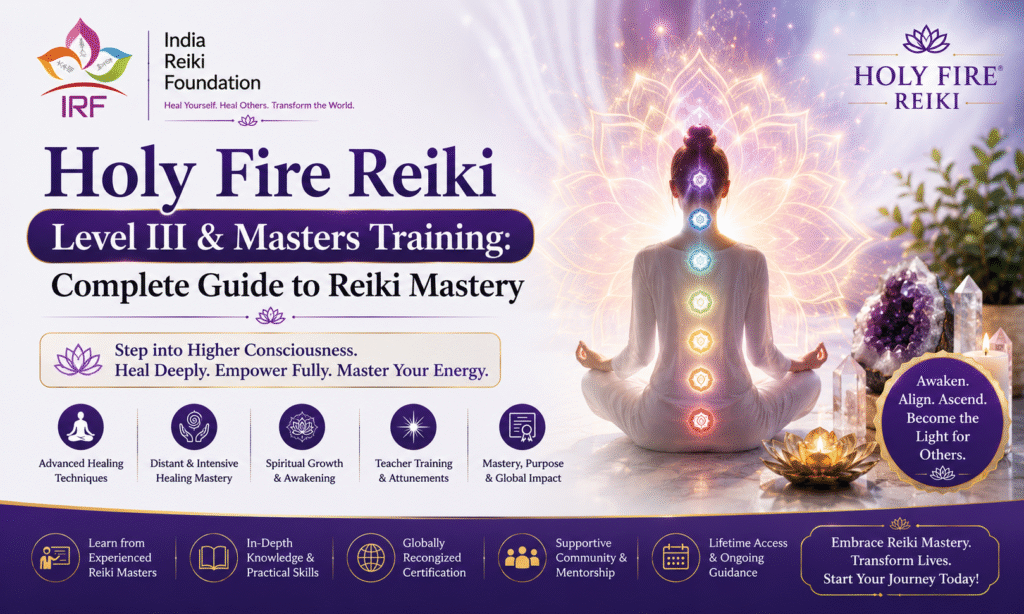
Reiki learning is often a gradual journey. The early stages introduce students to self-practice, energy awareness, Reiki principles, basic techniques, symbols, and distance healing. As practitioners gain experience, some feel ready to move beyond foundational learning and explore Reiki at a more advanced level. Holy Fire Reiki Level III & Masters Training is intended for this next stage, where personal practice, advanced Reiki methods, spiritual development, and preparation for teaching come together.
At the Master level, students are encouraged to develop a deeper relationship with Reiki rather than simply adding new techniques to what they already know. The learning process includes advanced meditation, the Dai Ko Myo Master Symbol, Holy Fire experiences, Master Ignitions, Placements, advanced healing approaches, and an understanding of how Reiki can be taught responsibly to future students.
For practitioners searching for a Holy Fire Reiki Course Online, a structured Online Reiki Course, or an advanced level after completing a Reiki Healing Course, Master-level training can provide a clear learning path. It can be valuable for individuals who want to strengthen their personal Reiki practice as well as those who aspire to become Reiki Master Teachers.
This guide explains Holy Fire Reiki Level III and Masters Training in detail, including eligibility, prerequisites, Master-level learning, online study, certification, teaching opportunities, spiritual development, and the role of India Reiki Foundation in supporting advanced Reiki education.
What Is Holy Fire Reiki Level III & Masters Training?
Holy Fire Reiki Level III & Masters Training is an advanced stage of Reiki education created for practitioners who have already developed a foundation through earlier levels. It brings together deeper personal Reiki practice and the skills required to progress toward Reiki Mastership.
Level III is generally centred on advanced Reiki awareness, meditation, Master Symbol work, personal development, and the integration of Reiki into a more consistent spiritual practice. Students move beyond the introductory understanding of energy healing and begin exploring how advanced Reiki can become part of their everyday life and personal growth.
The Masters component introduces another important area: teaching. Students learn how Reiki education is organised, how learners can be guided through different Reiki levels, and how Placements and Ignitions are incorporated into the Holy Fire Reiki system. Ethical conduct, communication, student support, and the responsibilities of a Reiki teacher also become important parts of the training.
The objective is therefore not simply to receive the title of Reiki Master. Mastership requires a mature approach to practice, continued learning, personal discipline, and respect for the responsibility involved in working with students and clients.
Who Can Learn Holy Fire Reiki Level III & Masters?
Holy Fire Reiki Level III & Masters Training is mainly designed for students who already have Reiki knowledge and practical experience. Practitioners who have completed suitable Level I and Level II training are generally better prepared to understand the concepts introduced at the Master stage.
It can also be appropriate for Usui Reiki practitioners or existing Reiki Masters who wish to learn the Holy Fire Reiki system. Their previous Reiki experience can provide a useful base, but they still need to understand the Holy Fire-specific approach to meditation, Placements, Ignitions, and Master-level teaching.
Wellness practitioners, spiritual learners, holistic practitioners, meditation facilitators, and people already working in complementary healing fields may also find this training valuable if they have the required Reiki background.
Readiness should not be judged only by the number of certificates a practitioner has collected. Regular self-practice, familiarity with Reiki principles, confidence in working with previous symbols, respect for ethical boundaries, and a genuine interest in personal development can all help prepare someone for Master-level education.
What Are the Prerequisites for Holy Fire Reiki Master Training?
A student entering Holy Fire Reiki Master Training should ideally have a clear understanding of earlier Reiki levels. Master-level learning builds upon foundational practice rather than replacing it. Before joining, practitioners should generally be comfortable with Reiki self-treatment, sessions for others, meditation, previously introduced Reiki symbols, distance Reiki, basic energetic awareness, and the principles of responsible Reiki practice.
Experience matters because advanced concepts become easier to understand when students have already spent time applying Reiki in everyday life. Someone who has consistently practised Reiki is likely to have questions and observations that make Master-level teaching more meaningful.
Students who are new to Reiki should avoid rushing directly into advanced training. Beginning with a well-structured Reiki Healing Course allows them to understand fundamental principles before moving toward more advanced stages. A gradual learning path also gives practitioners time to develop confidence, discipline, and practical awareness before taking on the responsibilities associated with Mastership.
What Do You Learn in Holy Fire Reiki Level III?
Holy Fire Reiki Level III expands the student’s understanding of Reiki beyond foundational techniques. The emphasis gradually shifts toward advanced practice, deeper awareness, meditation, and Master-level spiritual development.
One of the main areas introduced at this stage is Dai Ko Myo, commonly known as the Reiki Master Symbol. Students learn its significance within Reiki practice and how it relates to advanced meditation, energy work, and Mastership. Level III may also include Holy Fire meditation experiences, advanced self-practice, deeper awareness exercises, and techniques intended to help students integrate Reiki more consistently into their daily routine.
An important part of this level is the change in mindset. Students are encouraged to move away from focusing only on techniques and instead consider how they approach Reiki as a whole. Questions of consistency, ethics, responsibility, patience, and personal growth become increasingly important. The aim is to help experienced practitioners develop a more complete understanding of Reiki before they begin learning how to teach others.
What Do You Learn in Holy Fire Reiki Master Training?
Holy Fire Reiki Master Training prepares practitioners to take on the role of a Reiki teacher while continuing their own advanced development. Students learn how Reiki courses can be organised, how different levels may be taught, how meditation and guided experiences are facilitated, and how learners can be supported throughout their training. The course also introduces the role of Placements and Master Ignitions within the Holy Fire Reiki system.
Teaching Reiki requires more than knowing how to perform techniques. A Reiki Master Teacher needs to communicate clearly, respond to student questions responsibly, understand different learning needs, maintain professional boundaries, and create an environment in which students feel comfortable learning and practising.
Master training therefore includes both energetic and educational development. Students learn how to share Reiki knowledge in an organised way while continuing to strengthen their own practice. Anyone choosing a Holy Fire Reiki Course Online for Master-level learning should look for interactive instruction rather than a program based only on recorded lessons or reading material. Live guidance can be especially valuable when learning advanced concepts and teaching methods.
What Is the Dai Ko Myo Master Symbol in Holy Fire Reiki?
Dai Ko Myo is widely recognised within Reiki traditions as the Master Symbol. It is introduced at an advanced stage because it is connected with deeper Reiki practice and the responsibilities of Mastership. Rather than learning the symbol only as a shape, students study its purpose and how it fits within the larger Reiki system. Understanding context is important because Reiki symbols are traditionally learned as part of structured training rather than as separate tools.
Practitioners may work with Dai Ko Myo in advanced Reiki practice, meditation, personal development, and Master-level teaching according to the method taught by their Reiki teacher.
Students should not view learning the Master Symbol as an instant indication of mastery. Knowing a symbol and becoming an experienced Reiki Master are very different things. Confidence develops through regular application, reflection, continued study, and responsible practice.
For this reason, Dai Ko Myo is best understood as one important element within a broader Master-level journey.
What Are Holy Fire Reiki Master Ignitions?
Holy Fire Reiki Master Ignitions are advanced experiences used as part of the Holy Fire Reiki Master training process. They are connected with the student’s progression into Master-level Reiki practice.
Ignitions are generally facilitated within a guided learning environment rather than treated as independent exercises. Students participate through meditation and awareness while following the structure provided during the training.
These experiences form part of a complete educational process that also includes Master Symbol work, advanced Reiki practices, personal development, meditation, and teaching preparation. The purpose of learning about Master Ignitions is therefore not simply to seek an unusual energetic experience. Their meaning is better understood in relation to the complete Holy Fire Reiki system.
Students benefit from approaching them with openness while avoiding expectations about exactly what they should feel. Individual experiences can vary, and Master training should focus on understanding and integration rather than comparison between students.
What Is the Difference Between Placements, Ignitions and Traditional Attunements?
Different Reiki systems use different methods and terminology when students progress through levels. Traditional Usui Reiki commonly uses the term attunement. An attunement is traditionally facilitated by a Reiki Master according to the methods followed within their particular lineage.
Holy Fire Reiki uses the terms Placements and Ignitions. Placements are associated with certain stages of Reiki learning, while Ignitions are used at the Master level. The way these experiences are presented and facilitated differs from the traditional attunement model.
For students, the important issue is not which terminology appears more advanced. It is more valuable to understand the system being studied, the role of each process within the curriculum, and the responsibilities that come with progressing through the levels.
A well-structured Online Reiki Course should explain these distinctions clearly so students understand what they are experiencing rather than simply memorising unfamiliar terms.
What Advanced Healing Techniques Are Taught in Holy Fire Reiki Level III & Masters?
Advanced Reiki study builds upon the methods learned in foundational training and helps practitioners develop a more thoughtful approach to working with Reiki.
Students may explore Master Symbol practices, advanced meditation, deeper self-Reiki routines, distance Reiki, emotional support practices, energetic awareness, and ways of conducting more structured Reiki sessions. The emphasis is often on refining an existing practice rather than constantly adding unrelated techniques. At this stage, practitioners also benefit from developing better professional awareness. Working responsibly means understanding the scope of Reiki and communicating clearly with people who receive sessions.
Reiki can be used as a complementary wellness or spiritual practice, but practitioners should not diagnose medical conditions, promise specific outcomes, or encourage someone to replace qualified healthcare with Reiki. Advanced Reiki education should therefore develop both practical skill and good judgement. For anyone considering professional Reiki work or teaching, these ethical foundations are essential.
How Does Holy Fire Reiki Master Training Support Spiritual Growth?
Personal and spiritual development is an important reason many practitioners decide to continue into Master training. Advanced Reiki study creates dedicated space for meditation, reflection, self-practice, and deeper awareness. Students may become more attentive to their own reactions, habits, beliefs, emotional patterns, and ways of relating to other people.
Regular Reiki and meditation practices can encourage qualities such as patience, compassion, self-observation, responsibility, gratitude, and greater awareness in everyday life. For future Reiki teachers, this personal work can be especially important. Students often look to their teachers for guidance, so a Master should ideally demonstrate maturity, appropriate boundaries, and respect for different experiences.
Spiritual development is individual, and people can experience Reiki training differently. A responsible course should therefore support exploration without promising that every student will have the same spiritual experiences or personal transformation.
How Is Holy Fire Reiki Different from Usui Reiki Mastership?
Holy Fire Reiki and Usui Reiki share a common connection to Reiki practice, but their teaching methods and Master-level processes are not identical. Traditional Usui Reiki programs commonly include teacher-led attunements and techniques passed through a Reiki lineage. Holy Fire Reiki uses Placements, Ignitions, guided meditations, and additional experiences within its training structure.
Another difference may be found in the terminology and way Master-level education is delivered. Students coming from Usui Reiki may recognise many underlying Reiki principles while also encountering new processes within Holy Fire Reiki.
Neither approach needs to be presented as universally superior. People may connect with different Reiki systems depending on their previous education, personal preferences, teacher, spiritual interests, and future goals. Understanding both approaches allows practitioners to make an informed decision rather than choosing advanced training simply because one system is described as newer or more powerful.
Can Usui Reiki Masters Upgrade to Holy Fire Reiki Master Training?
Yes. Practitioners who have already completed Usui Reiki Master training may continue their education by learning Holy Fire Reiki. Their previous Master-level knowledge can provide a useful foundation, but Holy Fire Reiki still introduces its own terminology, meditations, Placements, Ignitions, and teaching methodology. An experienced Reiki Master should therefore approach the course as a new area of learning rather than assuming everything will be identical to their previous training.
Studying Holy Fire Reiki does not necessarily invalidate or replace earlier Reiki education. Instead, it can broaden the practitioner’s knowledge and allow them to understand different approaches to Reiki Mastership. The most important consideration is maintaining clarity when practising or teaching so students understand which Reiki system and methods are being used.
Can You Learn Holy Fire Reiki Level III & Masters Online?
Yes. Students can learn Holy Fire Reiki Level III & Masters through live online training when the course is structured appropriately for virtual participation. An interactive Holy Fire Reiki Course Online can include teacher-led instruction, meditation, discussion, guided experiences, advanced Reiki practice, and opportunities for students to ask questions in real time.
Online learning can make Master-level Reiki education accessible to people who live far from a training centre or who prefer learning from home. It can also allow students to choose a trainer based on teaching quality rather than geographical location.
However, not every online course offers the same depth. Students should look carefully at whether a program provides live teaching, an organised syllabus, proper prerequisites, practical learning, access to the teacher, and clear certification requirements. An effective Online Reiki Course should create genuine interaction between students and the teacher rather than simply providing recorded lessons followed by automatic certification.
How Long Does Holy Fire Reiki Level III & Masters Training Take?
Holy Fire Reiki Master Training is usually organised as an intensive advanced program, although exact duration may differ according to the training structure and learning format.
India Reiki Foundation’s Level III and Masters program is designed as a multi-day learning experience covering advanced practice, meditation, Dai Ko Myo, Holy Fire Master Ignitions and Placements, teaching methods, student guidance, and integration. A multi-day format gives students time to participate in guided experiences, understand concepts, practise, discuss questions, and process what they are learning.
Formal course duration, however, should not be confused with becoming an experienced Reiki Master. Completing a Master program may take only several days, but developing confidence can take considerably longer. Regular Reiki practice, meditation, working with others, continued study, and eventually teaching all contribute to the ongoing development of a Reiki Master.
Can You Teach Reiki After Completing Holy Fire Reiki Master Training?
Holy Fire Reiki Master Teacher training is designed to prepare students to eventually teach Reiki within the system they have studied. During the course, practitioners learn how to organise classes, explain Reiki principles, guide learners, facilitate relevant experiences, communicate responsibly, and support students through different stages of training.
However, completing a course does not mean every graduate needs to start teaching immediately. Some Reiki Masters may already have considerable experience and feel prepared to begin teaching soon. Others may prefer to continue practising, observe experienced teachers, review course material, and develop their communication skills first.
Responsible teaching requires more than technical knowledge. Patience, confidence, professionalism, ethical awareness, and the ability to support people with different expectations are also important.
The best time to begin teaching is when a practitioner feels genuinely prepared to guide others rather than simply because they have received a certificate.
How Do You Become a Certified Holy Fire Reiki Master Teacher?
The pathway to Reiki Master Teacher certification generally begins with completing the foundational Reiki levels and developing practical experience before progressing to advanced training. Students usually learn Reiki Level I first, followed by Level II and regular practice. When they are ready, they can move into Holy Fire Reiki Level III & Masters Training.
At the advanced level, students study the Master Symbol, meditation, Master-level Reiki practices, Placements, Ignitions, course organisation, ethics, communication, and teaching methodology. The training prepares them to understand both personal Master-level practice and the practical responsibilities of teaching.
Once required course components have been completed according to the training organisation’s standards, students may receive their Master-level certification. The certificate marks the completion of formal training, but continued practice remains important. Teaching experience, ongoing learning, personal development, and regular Reiki practice help practitioners grow into the role of Reiki Master Teacher over time.
What Are the Benefits of Holy Fire Reiki Level III & Masters Training?
One of the main benefits of Master-level education is the opportunity to develop a broader understanding of Reiki. Practitioners move beyond introductory methods and explore advanced meditation, Master Symbol work, Holy Fire experiences, Placements, Ignitions, deeper Reiki practice, and teaching skills.
The training can also help students become more confident in their personal practice. By revisiting foundational concepts from a more advanced perspective, they may gain a clearer understanding of how different elements of Reiki fit together.
For those planning to teach, Master training provides knowledge about class organisation, student guidance, communication, professional responsibility, and Reiki education. Students who do not wish to teach may still find the course valuable as part of their personal and spiritual learning.
Ultimately, the benefit of Master training is not simply gaining permission to use a title. Its deeper value comes from greater knowledge, continued practice, self-awareness, and a stronger sense of responsibility toward the Reiki path.
What Can You Do After Becoming a Holy Fire Reiki Master?
Becoming a Holy Fire Reiki Master can open several directions, depending on the practitioner’s interests and experience. Some people continue using Reiki primarily for self-practice, meditation, and spiritual development. Others choose to offer Reiki sessions as part of a professional complementary wellness practice.
Practitioners who have completed teacher preparation may eventually conduct Reiki courses, facilitate workshops, support beginner students, and guide experienced practitioners through advanced training. Some Reiki Masters integrate Reiki alongside meditation, yoga, holistic wellness education, or other complementary practices. Others prefer to focus specifically on Reiki sessions and teaching.
There is no requirement that every Reiki Master becomes a full-time teacher. Master-level learning can be valuable even when Reiki remains a personal practice. Whatever path is chosen, continued education remains important. Experienced practitioners often discover that becoming a Master creates more opportunities to learn rather than signalling the end of their Reiki journey.
Why Learn Holy Fire Reiki Level III & Masters with India Reiki Foundation?
India Reiki Foundation provides a structured pathway for practitioners who want to progress into advanced Reiki learning and Master Teacher preparation. The Holy Fire Reiki Level III & Masters Training program includes advanced Reiki practice, Dai Ko Myo, meditation, Holy Fire experiences, Master Ignitions, Placements, spiritual development, teaching methodology, and guidance for working with future students.
For learners looking specifically for a Holy Fire Reiki Course Online, India Reiki Foundation offers the opportunity to participate in structured Reiki education remotely. This can make advanced training accessible to students who may not be able to attend classes at a physical location. Live learning also creates opportunities for interaction with the teacher, discussion of concepts, guided meditation, questions, and practical explanation.
Another advantage of following a structured Reiki pathway is continuity. Students can develop their understanding progressively from foundational Reiki training toward the advanced Master stage instead of treating Reiki Master certification as an isolated course. For serious practitioners, this gradual approach can support stronger understanding, greater confidence, and more responsible future practice.
Frequently Asked Questions About Holy Fire Reiki Level III & Masters Training
1. What is the difference between Reiki Level III and Reiki Master Training?
Reiki Level III generally focuses on advanced personal Reiki practice, meditation, and the Master Symbol. Master Teacher training adds the knowledge and methods required to guide and teach Reiki students.
2. Who should take Holy Fire Reiki Level III & Masters Training?
The training is most suitable for experienced Reiki practitioners who have completed previous levels and want to deepen their practice or prepare for teaching Reiki.
3. Can I learn Holy Fire Reiki Master Training completely online?
Yes. A live Holy Fire Reiki Course Online can provide advanced instruction, meditation, interactive guidance, and teaching preparation through virtual sessions when properly structured.
4. Do I need to complete Reiki Level II before Reiki Master Training?
A strong Reiki Level II foundation is generally recommended because Master training builds upon previous symbols, distance Reiki, practical experience, and Reiki principles.
5. What Reiki symbol is introduced at Level III?
Dai Ko Myo is commonly introduced as the Reiki Master Symbol. It is studied within advanced Reiki training and connected with Master-level practice.
6. What are Master Ignitions in Holy Fire Reiki?
Master Ignitions are advanced experiences used within Holy Fire Reiki Master education. They form part of the system’s structured approach to Master-level progression.
7. Can an Usui Reiki Master become a Holy Fire Reiki Master?
Yes. Existing Usui Reiki Masters can learn Holy Fire Reiki by completing the appropriate training and studying its specific methods, terminology, Placements, Ignitions, and meditations.
8. How long is Holy Fire Reiki Level III & Masters Training?
Advanced Master training is generally completed over several days, depending on the course format. Developing confidence as a practitioner and teacher continues through regular practice after certification.
9. Can I start teaching Reiki immediately after certification?
Master Teacher certification provides the educational foundation for teaching, but students should begin when they feel confident in their knowledge, practice, communication, and ability to guide others responsibly.
10. What should I check before joining a Holy Fire Reiki Course Online?
Look at the instructor’s experience, course syllabus, prerequisites, live interaction, practical training, Master-level curriculum, certification process, and opportunities to ask questions before enrolling.
Conclusion
Holy Fire Reiki Level III & Masters Training is an important stage for practitioners who want to deepen their Reiki knowledge and move toward Master-level practice. It combines advanced Reiki education with meditation, Dai Ko Myo, Holy Fire experiences, Placements, Master Ignitions, teaching preparation, ethics, and personal development.
The training can serve different purposes. Some practitioners join because they want to strengthen their personal spiritual practice, while others intend to become Reiki Master Teachers and guide new students. Existing Reiki Masters may also explore Holy Fire Reiki to broaden their understanding of different Master-level methods.
For students who have already completed an introductory Reiki Healing Course or another foundational Online Reiki Course, moving into Master training should be approached thoughtfully rather than as a way to obtain certification quickly. When selecting a Holy Fire Reiki Course Online, it is important to consider the depth of the syllabus, teacher guidance, live interaction, opportunities for practice, ethical standards, and the quality of Master Teacher preparation.
Reiki mastery is ultimately an ongoing process. Formal training can provide knowledge and certification, but practical experience, consistent Reiki practice, meditation, self-awareness, ethical conduct, and continued learning are what allow a practitioner to grow into the responsibilities of Mastership. For students who are ready for that deeper commitment, Holy Fire Reiki Level III & Masters Training can become an important next stage in their Reiki journey.
India Reiki Foundation | Online Reiki Course & Spiritual Healing Academy
Address- 502–503, Stanford Plaza, Veera Desai Road, Andheri West, Mumbai, Maharashtra 400065, India
Phone number +91 96254 88550
Website- https://indiareikifoundation.com/
Mail- mail@indiareikifoundation.com