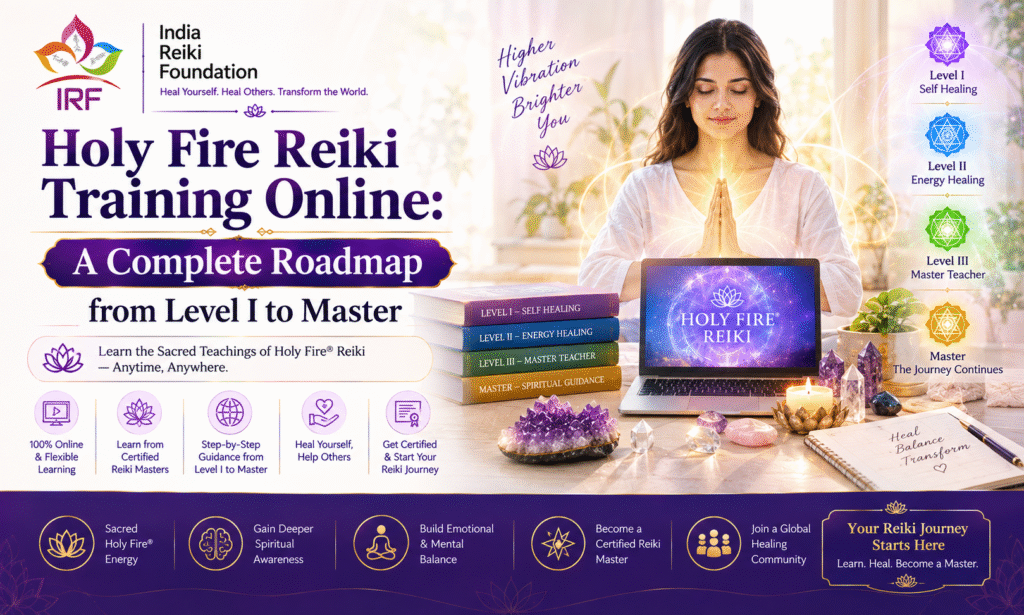
Beginning Reiki training often starts with a simple question: where should I begin? But once someone starts researching, they may come across several levels, symbols, terms, certifications, practitioner stages and Master Teacher programs. Understanding this progression before enrolling is important because Reiki education is designed to develop gradually. The early levels establish personal practice and foundational knowledge, while later levels introduce advanced techniques, deeper spiritual study and teaching responsibilities. A structured Holy Fire Reiki Course Online should therefore help learners move from one stage to another with clarity rather than treating every level as a separate, disconnected qualification.
For people exploring a Reiki Healing Course for self-development, spiritual learning or future practitioner work, the journey usually begins with Level I and develops through Level II, Level III and Master-level training. Each stage has a different objective. Level I introduces the foundation, Level II expands the practice through symbols and distance Reiki, while Level III and Master training focus on advanced techniques, Master symbols, Placements, Ignitions and teacher preparation. This guide explains the complete path in a practical, easy-to-follow way so anyone considering an Online Reiki Course can understand what to expect before moving from beginner training toward Master Teacher education.
What Is Holy Fire Reiki and How Does It Work?
Holy Fire Reiki is a contemporary Reiki system that follows the broader principles of Reiki while introducing a structured approach to spiritual practice, meditation and advanced training. Students typically learn Reiki principles, self-practice, energy-awareness concepts, Reiki symbols and guided processes such as Experiences, Placements and Ignitions. These elements are not introduced all at once. They are taught according to the student’s level so that each new practice builds on an existing foundation.
Within Reiki tradition, the practice is generally associated with relaxation, meditation, spiritual development and complementary wellness. Learners may first use Reiki as part of their own personal routine and later develop the confidence to practise with others. It is important to understand that Reiki should not replace medical diagnosis, treatment or qualified healthcare. Instead, it is best approached as a complementary spiritual and wellness practice that is learned progressively under proper guidance.
A Holy Fire Reiki learning path may include:
- Reiki principles and philosophy
- Self-Reiki
- Reiki hand positions
- Meditation and grounding
- Aura and chakra concepts
- Reiki symbols
- Distance Reiki
- Holy Fire Experiences
- Placements
- Ignitions
- Master-level practices
- Teaching methods
The structure of a Holy Fire Reiki Course Online should make it clear which of these practices belong to each level.
Can Beginners Learn Holy Fire Reiki Online?
Yes. A beginner can start Holy Fire Reiki without previous Reiki experience by beginning with Level I. This introductory level is designed to explain the fundamentals, including basic Reiki concepts, self-practice, hand positions and meditation. Students are not expected to understand advanced symbols or Master-level techniques when they first begin.
Online learning can also make Reiki education more accessible. Students who live far from a teacher, have limited travel options or prefer scheduled home-based learning can attend a structured Online Reiki Course through live sessions. The quality of online learning depends on the course format, the teacher’s guidance and the learner’s participation rather than simply on whether the class takes place online.
Beginners usually start by learning:
- What Reiki is
- Basic Reiki principles
- How self-Reiki is practised
- Basic hand positions
- Grounding and centering
- Introductory meditation
- Energy-awareness concepts
- Consent and boundaries
- Personal practice discipline
The right beginner course should make Reiki understandable before introducing advanced material.
What Are the Different Levels of Holy Fire Reiki Training?
Holy Fire Reiki training develops in stages because the skills introduced at later levels depend on the earlier ones. Level I establishes the basic foundation, Level II builds practitioner-level skills, Level III moves into advanced Reiki concepts and Master training introduces the teaching side of the system.
This gradual progression is useful for learners because it gives them time to practise between stages and decide whether they want to continue further. Some people may be satisfied after Level II, while others may wish to continue into advanced or Master Teacher training.
The four main stages can be understood as:
Level I – Beginner Foundation
Students are introduced to Reiki principles, self-practice, meditation and basic hand positions.
Level II – Practitioner Level
Students learn Reiki symbols, distance Reiki and expanded applications.
Level III – Advanced Study
The learner begins Master-level practice and deeper Reiki study.
Master Level – Teaching Preparation
Students learn advanced processes and how to guide future learners.
This structure allows the student to build confidence one stage at a time.
What Is Included in Holy Fire Reiki Level I & II Training Online?
Holy Fire Reiki Level I & II forms the essential practitioner foundation. Level I concentrates on understanding Reiki and building a personal practice. Level II then develops the learner’s knowledge through symbols, distance Reiki and more structured applications.
A comprehensive Reiki Healing Course at this level should combine explanation with practical learning. Students should understand not only what each technique is called, but also where it fits within Reiki practice and how it can be used responsibly.
Level I & II learning may cover:
- Reiki history and principles
- Self-Reiki practice
- Reiki hand positions
- Meditation
- Grounding techniques
- Energy awareness
- Aura concepts
- Chakra concepts
- Level II symbols
- Distance Reiki
- Practising with others
- Session preparation
- Mental and emotional Reiki applications
- Ethical boundaries
- Practitioner responsibilities
Together, these areas help students move from introductory learning to a more organised Reiki practice.
What Reiki Symbols Are Taught in Holy Fire Reiki Level II?
Reiki Level II introduces symbols that play an important role in practitioner-level Reiki. Students are generally taught three symbols associated with power, harmony and distance work. These symbols expand how Reiki is traditionally practised and become part of the learner’s ongoing practice.
A good course should not simply show students the symbols and move on. Learners need to understand how to draw them, their traditional purpose and how they are incorporated into Reiki practice. Repetition and practice after the course are important so that students develop familiarity rather than relying only on memory.
Level II symbol learning may include:
- Power symbol
- Harmony symbol
- Distance symbol
- How to draw each symbol
- Traditional meaning of each symbol
- How symbols are activated
- Use during self-Reiki
- Use during practitioner sessions
- Use within distance Reiki
Symbols become more meaningful when they are practised consistently instead of treated as theoretical information.
What Is Distance Reiki and When Is It Introduced in the Course?
Distance Reiki is normally introduced during Level II. Within Reiki tradition, it refers to practising Reiki when the practitioner and recipient are not in the same physical location. The Distance symbol becomes especially important at this stage.
Students are generally taught how to prepare themselves, set an intention, work with the appropriate symbol and complete the practice in a structured way. Consent and respectful boundaries remain important even when the practice is not taking place face to face.
Distance Reiki learning may include:
- Preparing before the practice
- Working with the Distance symbol
- Setting a clear intention
- Maintaining concentration
- Understanding consent
- Structuring the practice
- Closing the session properly
Distance Reiki belongs to the spiritual framework of Reiki and should not be promoted as a scientifically proven remote treatment for medical conditions.
How Much Practice Is Recommended After Holy Fire Reiki Level I & II?
There is no single number of days that guarantees readiness for Level III. Some students may feel comfortable quickly, while others may need more time to integrate the symbols and techniques they have learned. Consistency is more important than speed.
Regular practice helps students become familiar with hand positions, symbols, self-Reiki and distance Reiki. It also allows them to notice where they need further guidance before moving into advanced training.
Useful ways to practise include:
- Maintaining regular self-Reiki
- Reviewing Reiki principles
- Practising hand positions
- Drawing the Level II symbols
- Using symbols in personal practice
- Practising distance Reiki
- Reviewing notes
- Keeping a Reiki journal
- Practising with willing participants
- Asking the teacher follow-up questions
The purpose of practice is to build confidence and understanding rather than to reach the next certificate quickly.
When Are You Ready to Progress to Holy Fire Reiki Level III?
A student may consider progressing to Level III when foundational Reiki feels familiar and manageable. They should already understand the basics of self-Reiki, Level II symbols, practitioner responsibilities and distance Reiki before moving into advanced learning.
Readiness also depends on the learner’s intention. Some people are interested only in personal Reiki practice, while others may feel drawn toward deeper spiritual study or future teaching. There is no requirement that everyone must become a Reiki Master.
You may be ready for Level III when:
- You practise Reiki regularly
- Level II symbols feel familiar
- You understand distance Reiki
- You are comfortable with self-Reiki
- You have experience practising with others
- You understand consent and boundaries
- You want deeper learning
- You are ready for advanced responsibility
The decision to progress should come from genuine readiness rather than pressure to move quickly.
What Is Covered in Holy Fire Reiki Level III & Masters Training Online?
Holy Fire Reiki Level III & Masters training moves beyond practitioner-level Reiki and into advanced study. Students are introduced to Master-level symbols, Holy Fire Experiences, Placements, Ignitions and other advanced practices that form part of the Master journey.
This level can serve two types of learners: those who want deeper personal practice and those who want to eventually teach Reiki. The curriculum therefore includes both advanced Reiki concepts and teaching-related responsibilities.
Advanced training may cover:
- Usui Master Symbol
- Holy Fire symbol
- Master-level meditation
- Advanced Reiki practice
- Holy Fire Experiences
- Master Placement
- Ignitions
- Reiki crystal-grid practice
- Conducting Placements
- Conducting Ignitions
- Guiding students
- Teaching symbols
- Planning classes
- Reiki teaching ethics
- Master Teacher responsibilities
This stage represents a significant step beyond Level II because the learner begins preparing to guide others.
What Are Placements and Ignitions in Holy Fire Reiki Training?
Placements and Ignitions are specific processes used within the Holy Fire Reiki system at different stages of training. Placements are used during earlier and advanced levels, while Ignitions are primarily connected with Master-level education.
These processes are usually experienced under the guidance of a trained Reiki Master Teacher. They are not simply techniques that can be fully understood from written instructions, because they form part of the experiential side of the course.
Important terminology
Placement
A guided process used during specific stages of Holy Fire Reiki training.
Master Placement
An advanced process connected with Master-level study.
Ignition
A Holy Fire process used during Master-level training.
Holy Fire Experience
A guided meditative process used within the training system.
Learning these processes in sequence helps students understand how they fit into the broader Reiki journey.
What Is the Difference Between a Reiki Practitioner and a Reiki Master?
A Reiki practitioner generally focuses on self-practice and practitioner-level sessions. Depending on their level, they may use Reiki symbols and practise distance Reiki with others.
A Reiki Master has completed advanced training. A Master Teacher additionally learns how to teach Reiki, conduct advanced training processes and guide students through different levels.
A Reiki practitioner may focus on:
- Self-Reiki
- Reiki sessions
- Hand positions
- Level II symbols
- Distance Reiki
- Ethical practice
- Practitioner boundaries
A Reiki Master Teacher may additionally learn:
- Master symbols
- Holy Fire Experiences
- Placements
- Ignitions
- Advanced meditation
- Teaching methods
- Student guidance
- Class management
The difference is therefore not simply a title. It reflects a different level of knowledge and responsibility.
Do You Need Level I and II Before Joining Holy Fire Reiki Master Training?
A complete beginner should first complete foundational Reiki education before entering Master training. Level III and Master-level classes assume that the student already understands the concepts and techniques introduced earlier.
Students who have trained in another Reiki tradition may sometimes be eligible for advanced learning depending on their previous qualification and experience. This should be confirmed directly with the training provider.
Before joining Master training, students should clarify:
- Which Reiki level they have completed
- Which Reiki system they studied
- Whether they completed Level II
- Their practical experience
- Whether previous certification is accepted
- Whether any preparation is required
This avoids entering advanced training without the necessary foundation.
Can You Become a Certified Holy Fire Reiki Master Online?
Yes. Holy Fire Reiki Master training can be completed through a structured online learning format. Live classes allow students to interact with the teacher, take part in guided practices and ask questions without needing to travel.
However, students should not choose a course only because it provides a certificate. The curriculum, teacher experience and practical guidance are far more important when evaluating advanced training.
Before enrolling, review:
- Teacher background
- Reiki lineage
- Eligibility requirements
- Advanced curriculum
- Live interaction
- Master symbols
- Placements
- Ignitions
- Teaching methodology
- Study material
- Certification
- Post-course guidance
Certification should reflect meaningful education rather than simply attendance.
How Long Does It Take to Complete Holy Fire Reiki Training from Level I to Master?
The formal classroom portion of Reiki training may take only a limited number of days, but the complete learning journey is much longer. Students need time to practise between stages and integrate what they have learned.
Someone can complete a scheduled course quickly but still need weeks or months to become confident with symbols, distance Reiki or practitioner techniques. This is why the focus should remain on development rather than speed.
A balanced progression may include:
- Level I training
- Self-Reiki practice
- Level II training
- Symbol practice
- Distance Reiki practice
- Practitioner experience
- Level III training
- Master education
- Continued advanced practice
- Teaching preparation where relevant
The best timeline is one that allows the learner to progress with confidence.
Is Online Holy Fire Reiki Training as Effective as In-Person Training?
Online Reiki training can provide a meaningful learning experience when it includes live instruction, interaction and guided practice. Students can attend sessions from home while still participating in meditation, demonstrations and discussions.
The quality of learning depends on the teacher and the structure of the course rather than the physical location of the classroom. A well-organised online program can provide strong guidance and continuity.
A good online program should include:
- Live teacher interaction
- Structured lessons
- Guided meditation
- Practical demonstrations
- Student participation
- Questions and answers
- Holy Fire Experiences
- Level-appropriate Placements or Ignitions
- Course material
- Follow-up guidance
Students should compare course quality rather than choosing solely based on online versus offline delivery.
Can a Holy Fire Reiki Master Teach Reiki to Others?
A student who completes appropriate Master Teacher training can learn how to teach Reiki. Teaching requires more than knowledge of Reiki techniques because the teacher must also know how to explain concepts, guide students and organise a learning experience.
A responsible Reiki teacher should communicate clearly and avoid making unsupported health claims. Reiki should be presented as a complementary spiritual and wellness practice rather than a guaranteed treatment.
Master Teacher training may prepare learners to:
- Teach Reiki Level I
- Teach Reiki Level II
- Guide advanced learners
- Explain Reiki symbols
- Conduct Experiences
- Conduct Placements
- Conduct Ignitions
- Demonstrate techniques
- Structure classes
- Answer student questions
- Maintain appropriate boundaries
Teaching Reiki therefore involves both practice and communication.
What Should You Look for in a Holy Fire Reiki Course Online?
Choosing a Holy Fire Reiki Course Online requires more than comparing prices. Students should look at the depth of the curriculum, teacher background, level of interaction and overall learning structure.
A reliable Online Reiki Course should clearly explain what is included, who can join, how the training is delivered and what certification students receive.
Important factors to compare include:
- Teacher qualifications
- Reiki lineage
- Level structure
- Live instruction
- Reiki symbols covered
- Distance Reiki
- Placements
- Ignitions
- Practical learning
- Study material
- Student support
- Certification
- Ethical approach
- Post-course guidance
A meaningful Reiki Healing Course should provide clarity instead of exaggerated promises.
Why Learn Holy Fire Reiki Online with India Reiki Foundation?
India Reiki Foundation provides a structured pathway for students who want to begin with foundational Reiki learning and progress toward advanced Holy Fire Reiki training. Learners can start with Level I & II and later continue to Level III & Masters when they are ready.
This approach can help students maintain continuity throughout their learning. Rather than studying isolated techniques from unrelated sources, learners can follow a progressive route from self-practice to practitioner development and advanced Master Teacher education.
The learning path may include:
- Reiki fundamentals
- Self-Reiki
- Reiki Level II symbols
- Distance Reiki
- Meditation
- Holy Fire Experiences
- Advanced Reiki study
- Master symbols
- Placements
- Ignitions
- Teaching methodology
- Practitioner certification
- Master Teacher certification
For learners who want a complete Holy Fire Reiki Course Online, this structured approach makes it easier to understand what comes next at every stage.
Frequently Asked Questions About Holy Fire Reiki Training Online
1. Can someone with no Reiki experience start Holy Fire Reiki?
Yes. Beginners can start with Level I, which introduces Reiki fundamentals and self-practice.
2. What is the first skill learned in Reiki?
Most beginners start with Reiki principles, basic hand positions, grounding and self-Reiki practice.
3. At which level are Reiki symbols introduced?
The main practitioner-level symbols are usually introduced during Level II.
4. When do students learn distance Reiki?
Distance Reiki is generally taught during Level II along with the Distance symbol.
5. Is Reiki Level II necessary before Master training?
A strong Level II foundation is generally expected before progressing into advanced Master-level education.
6. Can Holy Fire Reiki training be completed online?
Yes. Structured live online programs can provide both practitioner and Master-level Reiki training.
7. Are Placements and Ignitions the same?
No. They are different processes used at different stages of Holy Fire Reiki training.
8. Does every Reiki Master need to teach?
No. Some practitioners complete Master-level training for personal spiritual growth and advanced learning without becoming teachers.
9. Does an Online Reiki Course provide a certificate?
Many programs provide certification after completion. Students should check what level the certificate represents.
10. What should I check before choosing a Reiki teacher?
Review the teacher’s training background, Reiki lineage, curriculum, teaching experience, ethics, support and course structure.
Conclusion: Move Through Holy Fire Reiki at the Right Pace
A Holy Fire Reiki Course Online offers a clear pathway for learners who want to understand Reiki from the beginning and progress toward advanced training. Level I introduces personal practice, meditation and foundational concepts, while Level II expands the learner’s knowledge through symbols and distance Reiki. These stages create the practitioner base required before advanced education becomes appropriate.
Level III and Master training introduce a new level of responsibility. Learners explore Master symbols, advanced Reiki practices, Holy Fire Experiences, Placements, Ignitions and teaching methods. Reaching this stage should be based on readiness and experience rather than on how quickly a student wants to collect qualifications.
For anyone comparing a Reiki Healing Course or Online Reiki Course, the most effective approach is to choose a structured program, begin at the appropriate level and build practice between stages. India Reiki Foundation offers a progressive Holy Fire Reiki pathway from Level I & II through Level III & Masters, allowing students to develop from beginner practice toward advanced Reiki and Master Teacher training in a clear and organised manner.
India Reiki Foundation | Online Reiki Course & Spiritual Healing Academy
Address- 502–503, Stanford Plaza, Veera Desai Road, Andheri West, Mumbai, Maharashtra 400065, India
Phone number +91 96254 88550
Website- https://indiareikifoundation.com/
Mail- mail@indiareikifoundation.com